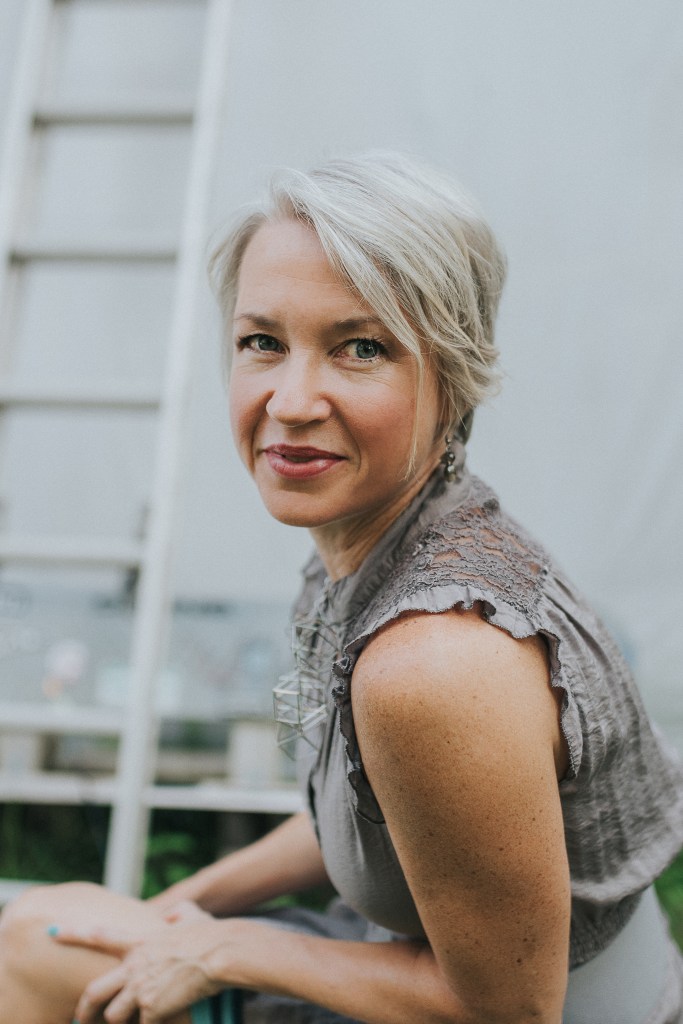
Charlotte Pence recently served as Mobile, Alabama’s inaugural Poet Laureate and a 2024 Academy of American Poets laureate fellow. Her latest book of poems, Code, received the 2020 Book of the Year award from Alabama State Poetry Society, was shortlisted for Best Indie Poetry Books of 2020 by Foreword Reviews, and selected as a must-read 2020 poetry collection from The Millions. Code details not only the life cycle of birth and death, but also the means of this cycle: DNA itself. Her first book of poems, Many Small Fires (Black Lawrence Press, 2015), received a silver Book of the Year Award from Foreword Reviews. Similar to Code, Pence weaves together personal experience and scientific exploration. Many Small Fires explores her father’s chronic homelessness while simultaneously detailing the physiological changes that enabled humans to form cities, communities, and households. She is also the author of two award-winning poetry chapbooks and the editor of The Poetics of American Song Lyrics. Her poetry and creative nonfiction have recently been published in Harvard Review, The New York Times, Poetry, Southern Review, Brevity, and featured on The Slowdown. She is also a MacDowell fellow, Sewanee Writers Conference fellow, Vanderbilt Patterson Fellow, and an Alabama Arts Council Individual Artist grant recipient. A graduate of Emerson College (MFA) and the University of Tennessee (PhD), she is currently completing a memoir and the new MFA director at Texas State University.
Five Questions with Charlotte Pence (Conduced by Grace Maxwell)
1. In your memoir, you describe dividing the grocery cart into “four quadrants, nine dollars each,” understanding the importance of a price buffer at a very young age. Later, you reflect that this thinking “has never entirely left” you. How do you see early survival strategies such as your margin for error shaping not only your life but also the way you think structurally in your writing?
That quadrant thinking of the four sections with the nine-dollar buffer was really just a child’s version of a margin for error. When you don’t have room to miscalculate, you build structure before you need it. And I think that’s followed me to the page.
With a big writing project, I can’t just wade in. The cost feels too high. If I don’t know where I’m going, I can lose months of work. Wrong turns, chapters that don’t belong, an architecture that won’t hold weight…. So, I outline. Not rigidly, but I need the shape of the thing before I trust myself inside it.
E.M. Forster asked, “How do I know what I think until I see what I say?” And I understand that impulse, I do. But for me, at scale, the outline is what I say first. It’s the nine dollars of buffer. It’s the thing that keeps the grocery purchase from coming up short at the register.
Poems are different, though. A poem I’ll follow anywhere. There’s something about the smallness of the form—the fact that if it fails, it fails fast—that lets me trust the wandering. I don’t need to know where a poem is going. Maybe that’s the one place where the survival math doesn’t apply, where I can afford to be lost. And maybe that’s part of why I love poetry.
But even with a memoir, even with an outline, errors will happen. I don’t even like to call them errors. Detours is maybe the better word. And they are just a part of the writing process. The outline just means you take detours with a map in your hand that may or may not serve. You still have to throw out chapters. You still miscalculate, overwriting some passages, underwriting others. The buffer never makes you safe. It just gives you a little more room to find your way back.
2. As a poet, your work often engages with image and associative thinking. In writing this memoir, how has shifting into prose changed your approach to pacing, structure, and narrative development? Are there elements of poetry that you find yourself consciously holding onto, or are there elements of storytelling that you’ve discovered that you might want to include in future poems?
I’m a southerner, which means story is in the water I grew up drinking. Sitting on porches, riding in cars, selling produce at the local farmer’s market, stories always dominate. It was always and then, and then, and then. So, when I came to poetry, I actually had to make a conscious choice to resist that. To not just tell you what happened. I had to teach myself a different kind of movement: associative, image-driven, that lovely meandering through the woods of the mind. And I came to love it. I still do.
The memoir felt like coming home to something I’d been quietly missing. I get to just tell a good story. I get to say and then. And honestly? It’s felt surprisingly natural. More natural than I expected. Like a part of me had been holding that mode in reserve the whole time.
As for what crosses over…. I think I’ll always reach for the image first. Even in prose, I’m not going to explain my way to meaning if a single concrete detail can do it better. That stays. And the rhythm of a sentence—I can’t stop hearing it. I’ll revise a line of prose the way I’d revise a line of poetry, just listening for where it wants to break.
What I’ve discovered writing this book that might travel back into poems is permission. Permission to stay with a moment longer than a poem usually allows. To not leap away so fast. I’m curious what it would mean to write a slower poem. A poem that trusts (a little bit more at least) the ground it’s standing on.
3. There is a powerful moment where you pause to say, “This is what age nine looked like to me from the inside.” This line acknowledges both the innocence and the limits of your younger self. How do you navigate the balance between honoring the child’s immediate perspective and layering in the adult voice that seeks to interpret and understand it?
You just honed in on one of the biggest challenges when writing a memoir. There’s a line I wrote in this excerpt that I keep coming back to when I think about this question: “This is what age nine looked like to me from the inside: a terminally ill mother and a missing father, and all you can think about is SpaghettiOs.” That line exists because of the gap—the gap between what was actually happening and what a nine-year-old’s mind could hold. She (the child Charlotte) couldn’t hold all of it. So, she held SpaghettiOs.
The child’s perspective in memoir has to be true to that narrowness. If I let the adult voice in too early, I betray her. The child doesn’t know she’s building margins for error; she just thinks she’s being clever with a grocery cart. She’s proud of herself. That pride must be honored before anything else.
But the adult voice has its own obligation, which is to see what the child couldn’t. So, I let the child live the scene fully: the cart that won’t budge, the man who cuts in line, the running away—and then I step back in as the narrator. That’s when I can say what she was actually doing. That she was performing competence for an audience of one. That she was already living in the conditional: If this falls apart, here is how I will still be okay.
The challenge is timing. If the adult arrives too soon, it feels like an explanation. If she arrives too late, the scene just sits there. What I’m always listening for is the moment when the child has taken the scene as far as she can, and then I let the adult take one quiet step forward. Not to correct her. Not to pity her. Just to say: I see you now in a way you couldn’t see yourself then.
What I hope is that the reader feels both things at once—the child’s reality and the adult’s understanding—without one canceling the other out.
4. Your website showcases biological, emotional, and familiar systems frequently explored in your poetry. In your memoir, we see a similar impulse toward patterns and organization through your lived experience. What has writing in a longer, narrative form allowed you to discover that poetry alone might not have revealed?
Poetry gave me the image, the moment, the fragment of truth you can hold in your hand. But memoir gave me the sequence. And sequence, it turns out, is where the real reckoning lives—because trauma doesn’t announce itself as a pattern while you’re inside it. You just think: this is life. This is how things are. It takes the longer form, the looking back across years, to see what was actually being handed down.
What writing this memoir has allowed me to discover—and I want to be direct about this—is that what happened in my family was not singular, and it was not personal. It was intergenerational. I think we as a nation are still deeply reluctant to reckon with what that means, especially when it comes to childhood. We want to believe that children are resilient, that they bounce back, that love is enough to offset harm. But Bessel van der Kolk’s research makes clear that early trauma lives in the body, not just the memory. It reshapes the nervous system. It changes the way a child learns to read threat, to attach, to trust. That nine-year-old girl in the grocery store wasn’t just having a hard day. She was being formed by it.
The memoir lets me say that plainly in a way a poem can’t, or at least, can’t in the same sustained, argued way. A poem can break your heart in fourteen lines. But it can’t make the case. It can’t follow the thread from a mother’s illness to a father’s leaving to a child building margins for error into every plan she’ll ever make and eventually to Complex-PTSD as an adult. Prose can do that. Prose can say: here is the system. Here is how it worked on a person. Here is what it cost.
I feel a real responsibility in writing this book to not let it be only my story. Because the truth is, there are millions of children right now living inside systems that are shaping them in ways no one is naming. And we will keep paying that cost—as families, as communities, as a country—until we are willing to look at it directly.
5. The grocery store scene builds intense emotional pressure, especially around visibility, shame, and the fear of being questioned. Amidst the emotional crescendo, your prose remains restrained and precise. What are your strategies for writing emotionally charged experiences without slipping into over-explanation or sentimentality?
Thank you! You noticed exactly what I was trying to do, and honestly, that’s the greatest compliment, because the strategy only works if it’s invisible.
The core of it, I think, is that I try to let the body report instead of the mind explain. I don’t write she was terrified. I write that her mouth was opening and closing like a landed fish. The body is a more honest witness than the interpreting mind, and it’s also more specific, which is where literature lives. Specificity is the antidote to sentimentality. Sentimentality reaches for the general feeling; precision stays with the exact thing.
And the exact thing, in that scene, is often almost comic. The Smurf purse. The dislike for bologna. The cart stuck on what might have been a dropped “pacifier or, even, the air itself”. I think that tonal counterweight—the comic sitting right next to the desperate—is what keeps the scene from collapsing into pure anguish. And paradoxically, it makes it more devastating. We laugh, and then the laugh catches in our throat.
I also rely heavily on objects. The SpaghettiOs, the nine-dollar quadrants, the Michael Jackson cover on the magazine rack. When you stay with the concrete and specific, the feeling arrives through the thing rather than instead of it. The moment I reach past the object toward the emotion, I’ve lost it.
And then there’s the cut. When the scene peaks with the people who cut in line, I don’t let the prose linger there. She runs away. And the prose runs with her. I’ve learned to trust the reader to feel what I’ve declined to explain.
The adult reflective voice only arrives after the scene has fully landed. Because if I let her in too early, she becomes an apologist. She starts managing the reader’s response instead of trusting it. The child must live the experience completely before I’m allowed to step back and say: Here is what I understand now that she could not.
Finally, I just want to say thank you. These questions were so carefully considered, and that kind of attention to the work means more than I can easily say. When someone reads closely enough to see what you were trying to do, and then asks you to talk about it, it’s a gift. It makes the writing feel worth the cost of writing it. Thank you for that.
Excerpt from Memoir-in-Progress
The following is from Charlotte Pence’s memoir-in-progress that focuses on three years (1984-1987) when the author (age 9) and her brother (age 15) were left to care for their incapacitated mother once their father left. Their mother suffered from a severe case Myasthenia Gravis, which rendered her barely able to move or speak without much rest between any small action.
“Did Dad leave us any money?”
My brother shrugged. “Forty bucks.”
“Forty!” It seemed a small fortune. In the past year and a half, I’d managed to compile five dollars in my piggy bank, an actual pink ceramic pig with a two-inch hole in its underbelly, capped off by a clear plastic seal grown soft from my constant checking. “That’s good, right?”
“Could be worse.” Shaggy-haired and handsome, he was already tan in June from his hours mowing the lawn and playing baseball. He carried the height of a man, the gangly frame of a boy—and the reticence of someone much older.
“Mom’s teacher check continues through the summer. So, we have two more months of that. We got real lucky there,” he said, meeting my eyes now.
August.
My mind careened back to today. To the grocery store. To the fact we were down to pickles, ketchup, and all the stuff I didn’t know how to magic into meals: baking soda, flour, corn meal, Italian seasoning, and random cans of Campbell’s cream of mushroom soup.
“When’s the next pay day?”
“First of the month. Two weeks away. She might have some money left in the bank. I’ll ask when she wakes up.”
But Mom’s news was disappointing. “No,” she said. “Your dad.” And that told us everything. We only had forty dollars for two weeks of groceries.
Despite how Lee kept telling me forty was not a lot of money, I went about my morning chores of watering our football field of a garden and drowning cutworms in a bucket of soapy water fantasizing about what I would buy. Everything my health-conscious and penny-pinching mother usually said no to. Donuts, white bread, the 25-cent packages of lunch meat Mom said would give us cancer, Cap’n Crunch, Fruity Pebbles, maybe even the pancake mix I’d seen at my friend Sandy’s house. Two liters of Coke, the real kind, not the off brand. Dinner could be hot dogs, canned Chef Boy-R-Dee ravioli, frozen fish sticks—and most of all SpaghettiOs, which Mom usually shook her head to unless I was sick. I was so excited at the thought of food that would brighten our cabinets like a rainbow, replacing the usual pale foods Mom preferred.
This is what age nine looked like to me from the inside: a terminally ill mother and a missing father, and all you can think about is SpaghettiOs. I am not sure, even now, whether to be ashamed of that or in awe of it.
After the Georgia sun began to weigh me down with sweat, I rushed inside to check on Mom: jammed the pillows that had slipped back under her head, asked if she was hungry, and held her water glass to her lips, accidentally pulling it out mid-sip. Finally, Lee emerged from the shower in a cloud of steam, snatched his keys off the counter, and we were gone.
I felt so important sitting in the cab of that Chevy Silverado with my brother, the local football star, who got stacks of love notes from the girls and who made grown men whisper and point when he’d walk by. Lee loved the attention but wore it in a cool way, like a hat slightly off to the side. He would keep his eyes straight ahead to avoid any interaction other than a tossed out: “How’s it goin’?”
“What are you so excited about?” he gruffed from behind the steering wheel, one wrist draped over the wheel with a casualness he’d only earned a month ago when Mom collapsed mid-history-lesson and he had to drive on his learner’s permit.
“We are going to get SO much good food,” I squealed.
“You know it’s just forty dollars, right? We have to make it last until the first of the month.”
“I know, I know. You keep saying that,” I said, fiddling with the volume. “It’s boring.”
“Just get stuff easy to make and to fill us up.”
“Like Fruity Pebbles?”
“Sure…. Maybe bread, too. Milk. Sandwich stuff.”
I nodded. I hadn’t included bread or milk when I imagined the list that morning, even though the lack of bread and milk is what had prompted the trip. I looked again into the Smurf purse to double-check the money.
“Oh. And the dog and cat need food.”
I groaned. There went my canned ravioli and extra Coke. We passed by the public housing in Rome, which looked like the red brick hotels in a Monopoly set, then the Dairy Queen that indicated we were close to the little town center. Soon we were turning into the parking lot of Food Lion, which Lee said he’d heard was cheaper than Kroger. The truck rumbled to a stop, and, as I was scrambling out, I noticed Lee rolling down the windows.
“What are you doing?”
“I’m going to wait out here.”
“Why?”
“Cuz I had to get up at 5:30 to go work out. I need a nap.”
I froze, the summer radiating from the cracked, black asphalt parking lot. No words were able to form—only the welling of panic, the flood of heat, my mouth opening and closing like a landed fish.
“Just get bread, milk, bologna, dog food—”
“I don’t like bologna,” I finally managed to say.
“Whatever. Get ham if we can afford it. Now go. We gotta get home to Mom.”
“Can’t you just come in with me?”
“I’m tired.”
And with that, he closed his eyes and lowered his ball cap, slouching down. I stared at his set jaw and knew there would be no convincing him. I also knew, in all the ways my muscles were zinging with alert, that this would end in an embarrassing mess.
I slumped away, trying to stop the wobbly tears, sniffle everything back, and approached the jagged line of grocery carts. I pulled on one, but it wouldn’t budge. Another. Nothing. Grunting and heaving, I couldn’t get it to pull toward me, everything a locked jangle. I kicked it, out of anger and hope that Lee would hear it and come help.
He didn’t. Now the tears were welling again, and I was puffing up with rage. What was I going to do if I couldn’t even get a cart? I stared out toward the truck, thinking I should scream at him to come, when I saw a stray cart in the lot. I hurried over before someone else could grab it and pushed the hot thing inside, my head lowered, body leaning forward like the cart was a boulder.
Once inside, the cool air soothed. It had been a while since I’d felt air conditioning. It felt like freshly made iced tea, and I stood there, letting it chill the sweat gathered around my hairline. You can do this, I kept telling myself, hoping to believe it. You can do this. The piped-in music cushioned some of the ugliness of the store with its metal shelves, too-shiny industrial flooring, and odd, sterile grocery-store smell that markets had back then, before the upscale stores figured out to pump in the smell of baking bread.
What I was really doing, I understand now, was performing competence for an audience of one. I needed to believe I could do the thing so badly that tricking myself was the only option.
My mind soon turned to figuring out how not to go over forty dollars. I did not, DID NOT, want to call attention to my presence without a parent, which could lead to unwanted questions about our lives and perhaps create that thing we feared more than the lack of money: a visit from the Department of Children’s Services. “We can’t go to foster care,” is all Lee ever said. And had to say.
But I didn’t know how not to go over the budget though. I had planned on Lee, who had scored a near perfect score on his PSAT, to tally it all in his head. I stood, immobilized, then the anger bloomed again as I thought of my math-whiz brother snoozing in the car.
Just move. Move. Don’t call attention to yourself.
Skipping the produce area—for I could not imagine anything we’d need from there with our garden almost primed for harvest—I began in the soup aisle, looking for my dreams: SpaghettiOs. I took two cans off the shelf and placed them in the wide mouth of my buggy. They looked lonely there, so I grabbed two more. And then I had an idea. I could divide the cart into four areas, each totaling ten dollars. That’s how I could keep track!
Once I figured that out—and once I figured out how to turn the cart, being sure to give it a wide berth around the displays—I started having fun. After the canned food aisle, I roamed around three times looking for the milk and bread. Then I remembered Mom needed yoghurt and cottage cheese, foods easier to swallow, so I tried to find that, not understanding there was a dairy aisle or even what dairy really was. I just knew it was in the cold section, so I began looking near the chicken and rolled my way all around the store, head down and butt out, grunting to push the buggy. I could feel adult eyes on me, so I tried tucking in my tail as I turned the cart, doing it the way adults did: straight backs, eyes ahead—bored. But the cart kept getting stuck on a flattened pea, dropped pacifier, or even the air itself, forcing me to abandon the adult straight-back ease.
After about an hour, I was feeling good with my choices, even though there was little in the cart. Milk, yoghurt, cottage cheese, white bread, deli ham (not bologna!), SpaghettiOs, fish sticks, American cheese, Pop Tarts, hot dogs, off-brand Cola, and two boxes of sweet cereal. To avoid any problems at the register, I had kept the sections to nine dollars in case I went over. I shoved that buggy up to the cashier line like I’d seen my mom do hundreds of times, buzzing with the excitement of showing Lee how I had done it. I didn’t feel so mad at him anymore. He was right. I could do this alone.
As I stood there, thinking about organizing it all into the kitchen cupboards back home, a man came up with two items in his hands. He looked at me. I looked away and stared at a magazine cover—Michael Jackson’s face, that red jacket. And then, to my shock, he walked right in front of my buggy. I swung toward him, wanting to squeal: Line Breaker! But his balding head of authority stopped me. As I wondered what to do, another woman with mounded load came up with her buggy and did the same thing. There wasn’t that much space for her buggy between mine and the man’s. So, she came in at a perpendicular angle, forming a fork in the line. As I stood there wrestling with my buggy, trying to turn it to get behind the woman, another woman came and moved in behind her—leaving me on the outs with three people ahead.
My head was spinning. Tears welled, something I hated about myself, something that came so quickly lately. I could not, could not, start crying here in front of all these people. And what if they started to ask questions, like where was my mother? I knew that answer would send me over the edge, that fine-honed edge between the lies we tell ourselves and the truth of the situation.
I ran. Leaving the cart, leaving all its calculated piles of nine dollars, leaving the milk sweating and the fish sticks softening. I ran toward the wide mouth of the sliding doors, felt that thick rubbery flooring signaling this was the last step before the humid air. I hit the sidewalk and ran straight toward the open-mouthed recline of my brother, sound asleep. I beat the side of his truck with my fist, pounding, convinced that if he didn’t wake up fast, someone would take the buggy with the food, the carefully selected, not-over-forty basket of food. He woke with a start, listened to my wails, and then opened the door. “Okay, okay,” he said yawning. “Let’s check you out.”
I cried the whole way home. Not only had I forgotten the pet food and had only two dollars left, I was wondering how I would ever be able to shop if people didn’t think I was old enough to check out. Maybe I could dress up like it was church next time? Wear a smidge of Mom’s makeup? And, as Lee told me, I would have to learn to say that I was in line. That he couldn’t do it all. “Repeat it after me,” he said. “I’m in line.”
Then he added: “And next time lose the Smurf purse.”
I have thought about Lee’s decision to stay in the truck many times over the years. I’ve thought about it with fury, with tenderness, and eventually with something closer to understanding. He was barely sixteen. He had just quit baseball for us, narrowing everything down to football: strength training, forty-yard dashes, cone drills, miles of running. He was, in the truck cab with his cap down, doing the only thing left to him: the small, private act of not being needed by anyone for some small portion of the day.
What strikes me now isn’t the humiliation, though it was there. What strikes me is the system I invented: the cart divided into four quadrants, nine dollars each, a buffer of one dollar per section against catastrophe. I was nine-years-old and already building in margins for error. Already certain that whatever I planned, something would go wrong. Already living in the conditional: If this falls apart, here is how I will still be okay.
That calculus has never entirely left me. I carry it the way you carry a posture learned young. Not as something chosen, but as something that simply became the shape of things.
 Panhandler Books